How to Explain Any Game in a Few Minutes
A simple order for teaching any game without losing the room, shown step by step with a real party game and a script you can reuse.
Planck Scale StudioPublished 5 min read
Also available in: Italiano, Français, Español, Magyar, Polski, Deutsch
Most game nights don't stall because the game is bad. They stall during the explanation. One person reads out every rule, someone starts checking their phone, and by the time you reach scoring, nobody remembers how a turn works.
Talking faster won't fix it. The order you say things in will. Below is a structure that works for almost any game, and we'll walk through it using our own party game, Gallery Gamble, because it's the one we know best. You don't need to play it to use any of this. In Gallery Gamble, a photo from someone's camera roll appears and everyone guesses whose it is, which is all you need to follow along.
Set everything up before you start talking
Nobody needs to hear about options they aren't choosing. Decide them yourself, before you have an audience.
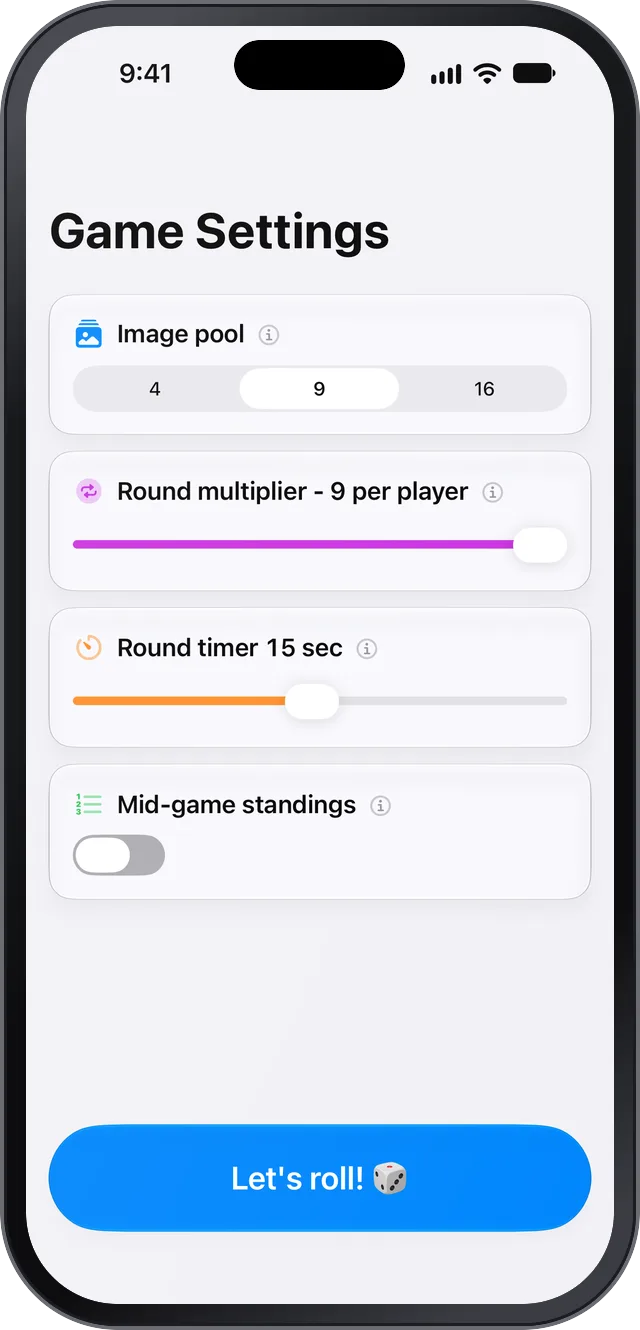
In Gallery Gamble, one person hosts and sets the number of rounds, the timer and the image pool. If you're that person, pick sensible settings and move on. The group doesn't need a tour of the menu. The same goes for sorting cards, dealing hands or setting out a board. Do it first, so that once you start talking, you only have to talk.
Explain while people are already waiting
Every game has a moment of dead time, and it's the best moment to teach. People are sitting down anyway, and there's nothing else to look at.
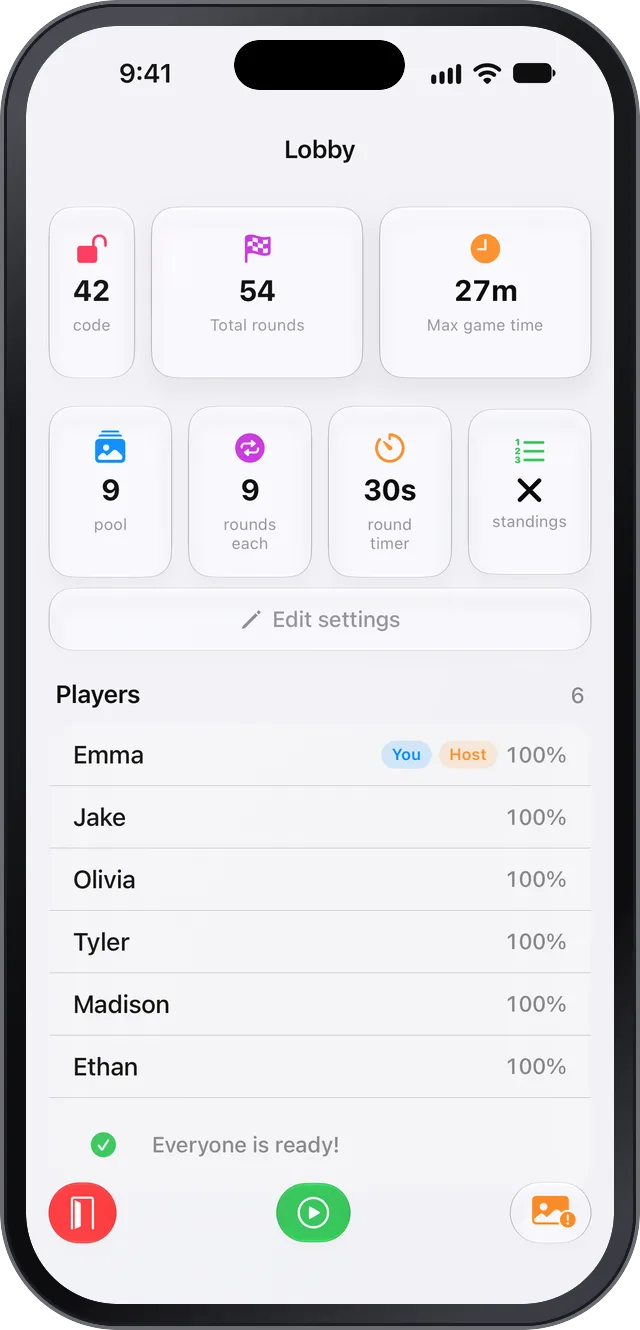
Here, that moment is the lobby. Everyone is entering the code from the host's screen and waiting for the last person to join. Start explaining then, and the game can begin as soon as the lobby is ready.
Start with the goal, in one sentence
Before people can make sense of a rule, they need to know what it's for. Tell them what they're trying to do and how they win, and keep it to one sentence:
A photo from someone's camera roll comes up, you guess whose it is, and the most points wins.
Every rule you explain after that now has somewhere to attach. If you can't get your game's goal down to one sentence, that's worth working out before anyone arrives.
Walk through one turn, in the order it happens
Don't explain the rules by category. Explain them in the order people will meet them. People remember a sequence of events far better than a list of systems.
For Gallery Gamble, one pass through the game sounds like this:
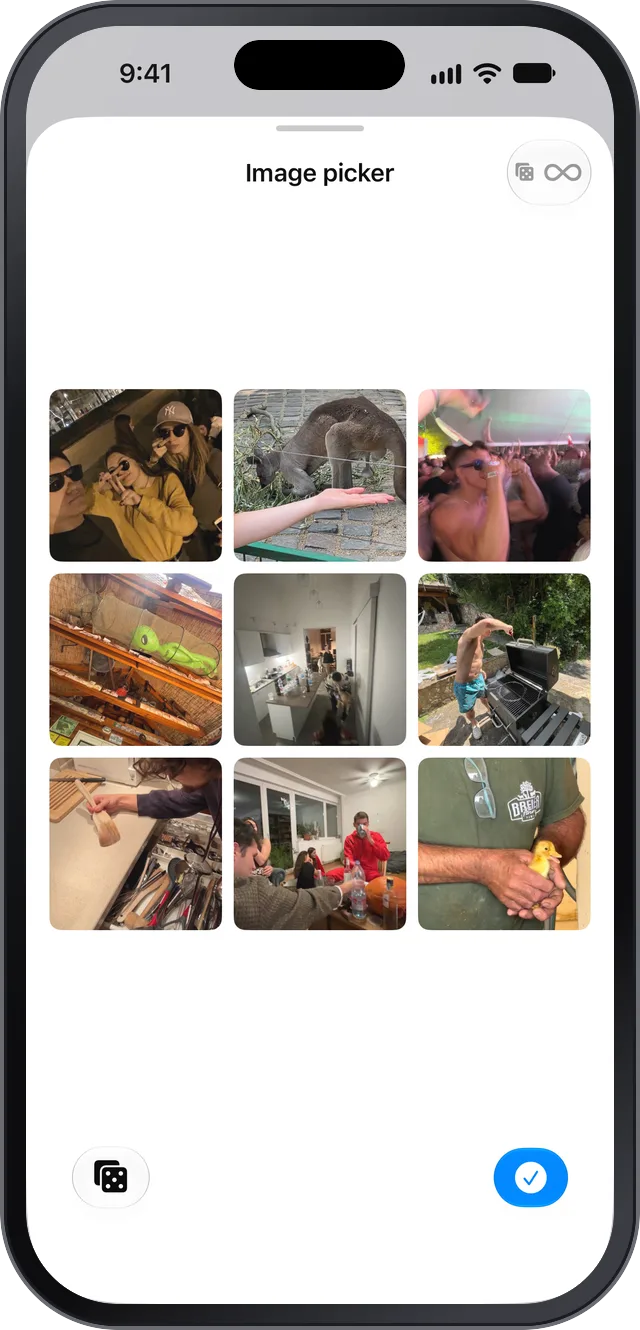
- You pick. "You'll get a random grid of photos from your own camera roll. Secretly pick one."
- You can bail. "If one's too embarrassing, re-roll it and you'll get a different photo."
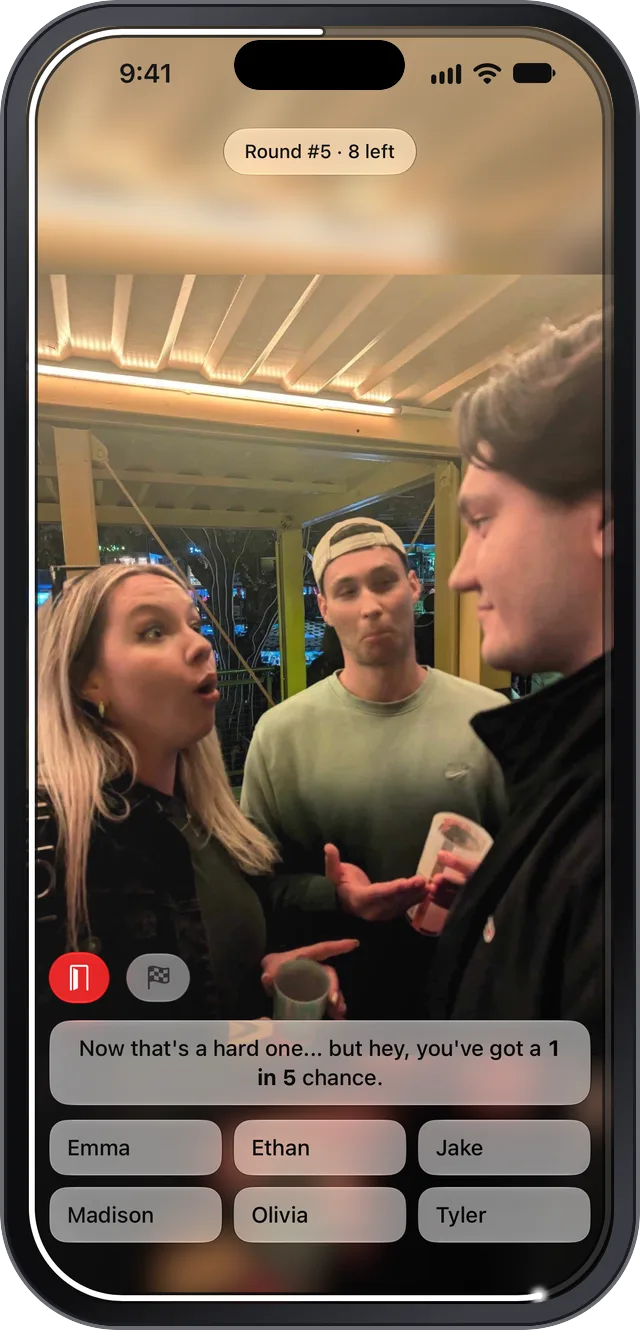
- You guess. "Then a photo comes up on everyone's screen. Tap the friend you think it belongs to before the timer runs out."
Notice what those three lines don't include: grid sizes, re-roll packs, what happens when the timer ends. They're just the events, in order, using words like "you" and "then".
Save the one twist for last
Most games have one rule that makes them interesting. Say it after people understand the basic turn, when they have enough context to enjoy it. Said too early, it's just one more rule. Said last, it's the thing they remember.
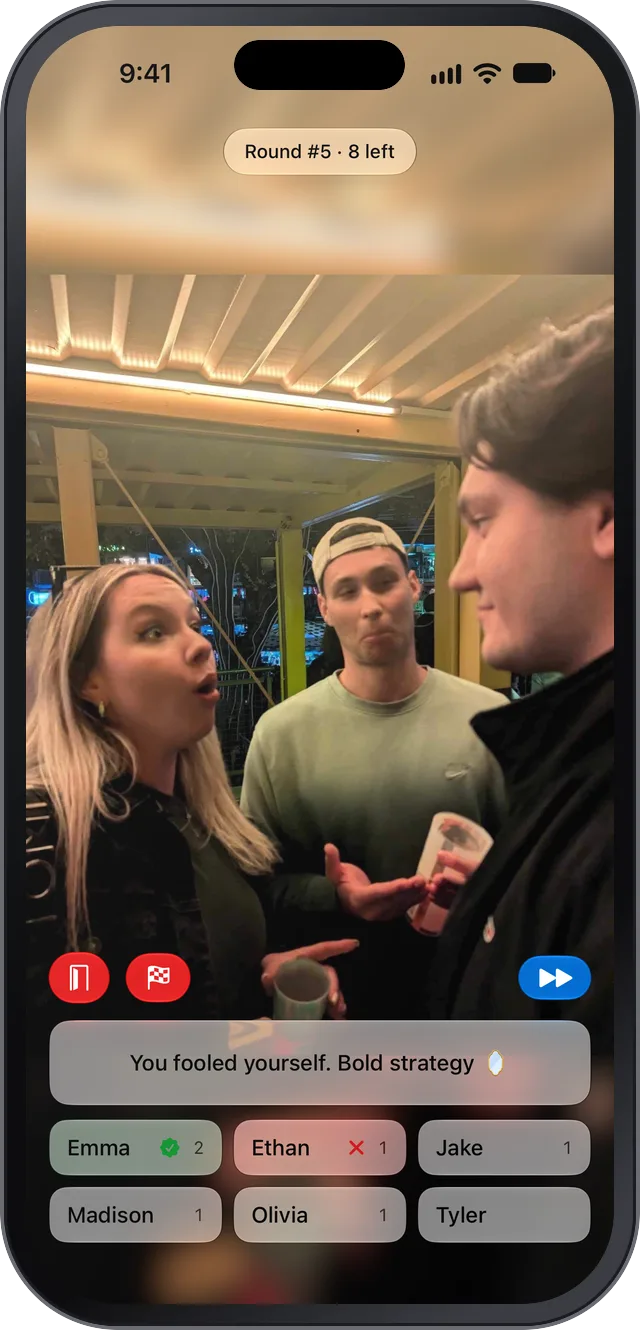
In Gallery Gamble, the twist is that your own photos come up too:
When your own photo shows up, you still have to tap yourself. Tap someone else and you've fooled yourself, and you miss the points.
It gets a laugh, and it's the rule people bring up again later. Your game has one of these as well. Find it, and give it its own moment.
Leave out everything that can wait
Here's a useful test for every rule on your list: will this come up in the first few minutes? If it won't, don't say it yet.
For Gallery Gamble, that means skipping the round multiplier, the choice of grid size and how re-roll packs work. None of those stop anyone from playing their first round. The same applies to edge cases, tiebreakers and strategy tips in any game. They make far more sense at the moment they matter, and you can explain them then in a single sentence.
Let the first round finish the job
Stop talking earlier than feels comfortable. A round teaches faster than a description, because people get to see the rules happen.
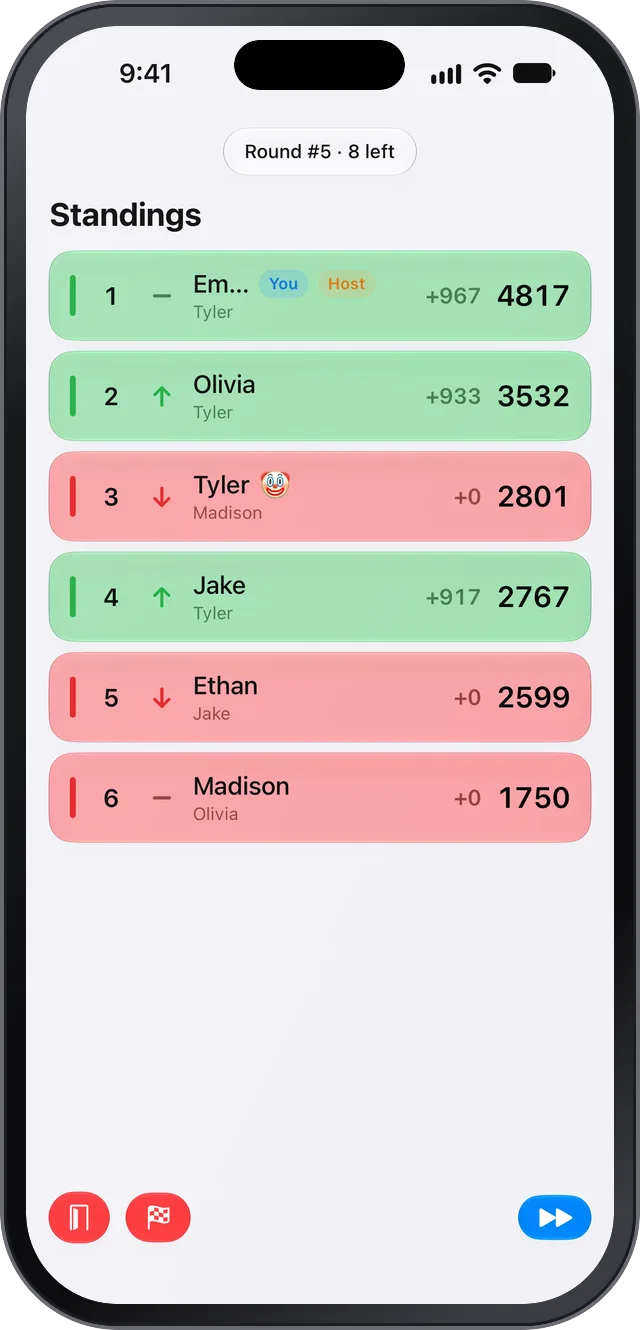
Narrate lightly as it plays out. At the first reveal: "See, it shows who got it right." At the first standings, if you've left them on: "That's the score so far, and there's plenty of time to catch up." If your game has heavier rules, make the first round a practice one that doesn't count, and say so up front. People take more risks and ask better questions when nothing's at stake.
Handling the room
A few things will happen no matter how good your explanation is:
- Questions in the middle. If the answer is coming up anyway, say "good question, I'll get there in a second." If it isn't, answer it in one line and carry on.
- The friend who already knows the game. Give them a job, like running the setup or helping the person next to them, before they start adding corrections.
- People arriving late. Don't start over. Let them watch a round, then give them the one-sentence goal and the twist.
- Someone who still looks lost. Don't ask in front of everyone whether they understood. Sit next to them for the first round, or put them on a team.
The whole explanation, start to finish
Put together, this is everything you need to say for Gallery Gamble while people join the lobby:
A photo from someone's camera roll comes up, you guess whose it is, and the most points wins. First you'll get a grid of your own photos. Secretly pick one, and re-roll anything you don't want to show. Then photos come up one at a time, and you tap whose you think it is before the timer runs out. Your own photos come up too, so tap yourself on those or you miss the points. That's it, let's play one.
It takes well under a minute to say. The first round handles the rest.
A template for any other game
The same structure works for anything from a card game to a long board game. Fill in the blanks:
In this game, you're trying to [goal], and whoever [how you win] wins. On your turn, you [first thing], then [next thing], then [last thing]. The one thing to watch out for is [the twist]. Let's play one round and you'll see.
If you can't fill in a blank, that's the part to reread in the rulebook before anyone sits down. If you need more than a line for one of them, you're probably explaining something that can wait.